4th World Weight Winners

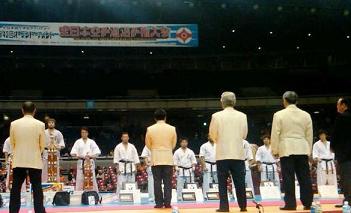
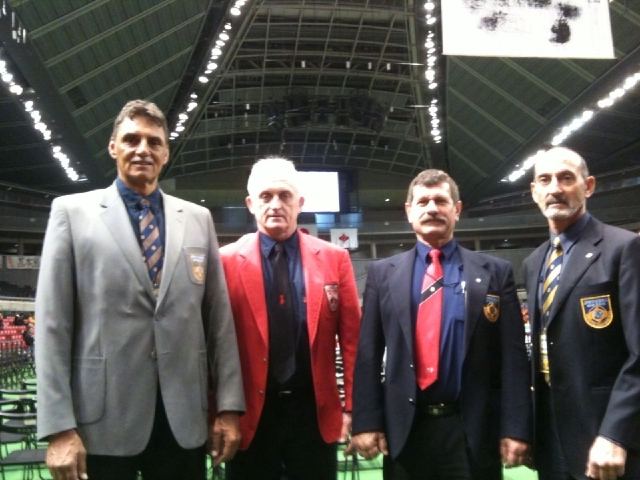
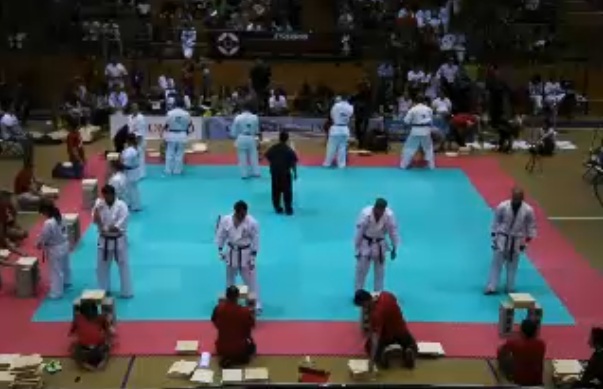
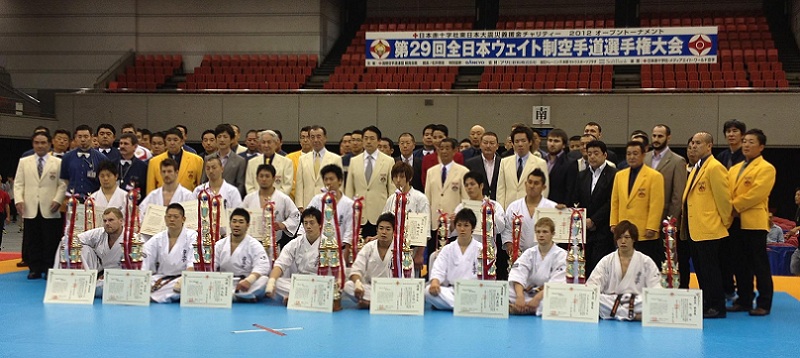
Congratulations to all the fighers who took place in the 4th World Weight Category Championships in Japan.

Read on for information and pictures!

Winners

Lightweight – Yuzo Suzuki (Japan)

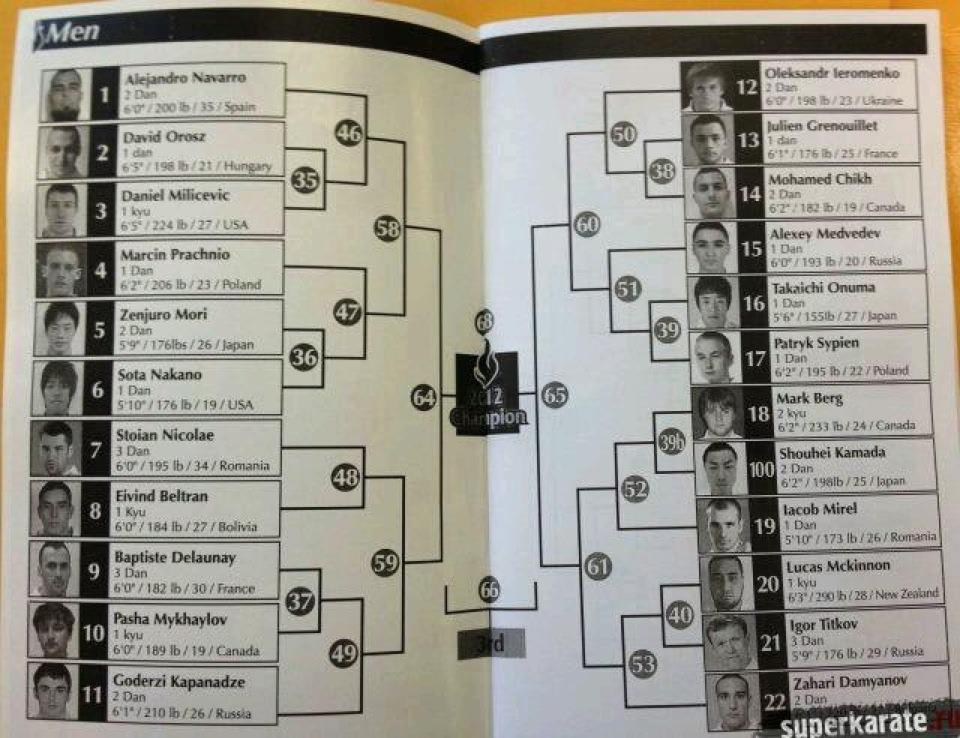
Middleweight – Mori Zenjyuro (Japan)

Heavyweight – Kentaro Tanaka (Japan)

Super Heavyweight – Mikhail Kozlov (Russia)

The finals of each weight division were outstanding with certainly one of the best matches of all time in the heavyweight. Alejandro Navarro against Kentaro Tanaka. The fight went to 2 extensions and was eventually decided by the amount of boards broken with Tanaka breaking 2 more boards that Navarro he was given the win.

Those of you who were interested in how the Australian fighter, Simon Kennedy, went…. unfortunatly he lost out in the first round with the Japanese fight just being too strong. Could of also been the fact that Simon had to drop down to the middleweight division so he could have still be suffering the effects of cutting weight.

Posted in 4th World Tournament (IKO1) | Tagged | Leave a comment

Live Streaming of Worlds

Great news for all fans of Kyokushin with IKO1 streaming the 4th World Weight Category Tournament live on the web. Along with the Women’s, Seniors and Youth Events.

Streaming will be available from 21st of August. Only the main mat will be streamed so you will only be able to see the karate fights from that mat, however on Sunday with the men’s division all fights will be on the main mat.

Just follow the following link to watch the event live and cheer on your favourite fighter!

http://www.ustream.tv/ichigeki

Posted in 4th World Tournament (IKO1) | Tagged | Leave a comment

4th World Weight Draw (IKO1)

The Kyokushin 4th World Weight Championships draw has been released and is now available.

The lone representative from Australia, Simon Kennedy from Sydney dojo, has a tough draw – facing Japan’s Hiroyuki Kidachi in the first round.

Click here for Tournament Draw

Posted in 4th World Tournament (IKO1) | Tagged | Leave a comment

Pressure of participating

Failing under pressure is a physical event, your pituitary gland generates more adrenalin that you central nervous system can handle. Your brain shifts into overdrive for the emergency, your digestive system shuts down to pump blood into your muscles and touches off in your stomach the queasy fluttering sensation known as butterflies. Your heart pounds faster, your bronchial tubes tighten and your skin feels clammy. As your breathing turns shallow you suddenly feel desperate for something to drink, your reflexes have no snap and your muscles knot.

Now you’ve psyched yourself into such a state that you can not function, concentrate or devise a strategy because your judgment is off. As you composure evaporates so does your self-confidence. You feel rushed, confused, finally distracted and indecisive. You miss an easy opportunity to score.

Concentrate on what is needed, and not on the actual technique you would like to do. Strive for sensible objectives rather than making irrational demands. The fight who is preoccupied with getting a knockout is guaranteed disappointment.

Knowing that mistakes are inevitable helps, worrying about missed opportunities will only create more pressure.

The most important asset you have is your mental attitude. While everyone should always want to win, being afraid of losing will only lead to either losing or not going forward when you could possibly have won.

At every tournament we watch competitor unravel and lose, due to pressure of competition. The pressure create in the competitor’s own mind is what brings them undone.

Thinking too much and too hard (rather than letting the body operate on its own), frustration, fear of losing all inhibit long learned skills and cause a potential winner to fail.

Fighting with poise is a prerequisite of a champion. We have all watched the champions come out cool and relaxed, then proceed to demolish the opponent who is far better than the fight would indicate. The champion often stays unruffled under great stress to come through in the end.

To a great extent it is more a question of recognising the symptoms as much as doing anything to get rid of them. When the pressure is causing you to ‘choke’ (tighten up) you must first recognise the problem and then realise it can be overcome.

So often the other competitors marvel at the competitor who remains cool no matter what. Most seem to think they (the other competitor) is born with that ability. Not so. The ability to relax is within us all. We decided whether we are our own worst enemy or not. The body will do what ever you tell it to do. Is is you who decides to either let your nerves run you or your run your nerves. Nerves can be a friend or an enemy. It is totally up to you. It is a question on self-control, and self control can be learnt. By practising self-control techniques the competitor can turn emotion into a plus instead of a minus, convert a situation of pressure from a liability into an asset. Fighters, athletes, workers, students, even housewives can all perform better if the symptoms are recognised and acted upon.

‘The most important asset you have is your mental attitude…’

Training yourself mentally as well as physically must go hand in hand, without both in tandem no competitor will be a consistent winner. Mental conditioning can pre-determine success or failure.

Many a competitor will tell you of times when the legs will not move, the arms will not co-ordinate or they keep miss-timing techniques. So how does a competitor overcome these problems, even when they recognise them? Firstly, control the breathing. Breath evenly and deeply through the diaphragm (as taught in your training). Avoid shallow breaths as this will cause hyperventilation and dizziness. Regular and even breathing pumps fresh oxygen into the blood cells and body tissues to replace lost energy, sending revitalised blood to the brain, lower tension and lifting concentration.

The trick is to do the technique that is possible at the time, bearing in mind that the simpler the task the better chance of success if the competitor is under a lot of pressure and the tension is overly high. Complex or wish-washy plans are more likely to fail when you are under tension. So when you hype is high keep it simple. research has shown that peak arousal leads to regression under stress. In other words no matter how much talent the competitor may have they will always fall back into a primitive level skill. The reason is that the key muscles work against each other while under tension, while relaxed ones work in harmony. It would then follow that such techniques as Gedan-Mawashi-Geri, Tsuki, and Mae-Geri have a better change of success when the hype is overly high, and return to the more difficult techniques if and when the tension is under control.

One conventional system for relaxation is ‘progressive muscle relaxation’. Research has shown that muscles relax better after being tensed. This reaction is electrochemical, squeezing out the calcium from the muscle fibre. Before starting, tense each of your major muscles for about five seconds then relax, starting from the legs and working up. Once the muscles are stretched they will be more limber, putting you more at ease. Another method can, and should, be used prior to going to the competition area. Visualise what you intend to do during the match, mentally practise everything you want to happen, going through each technique in your own mind.

All this will not replace the constant practise needed to perfect the techniques, but gradually you’ll learn to regulate your breathing, to relax your muscles and to visualise what you want to do. Soon you will do a better job of metabolising stress in your central nervous system, with experience (and in the long run experience is a big factor) you’ll form a virtual immunity against choking in a tight spot.

Seasoned competitors welcome pressure, as they know it brings out the best in them. They will all tell you of sometimes having great difficulty with a totally unseeded competitor after they had thought it would be an easy match. They welcome an opportunity to meet a new challenge, absorbing pressure, transforming frustration and even anger into motivation and ambition. With pressure on, the tough minded competitor will grow in stature, vaulting to new heights and horizons.

Shihan John Taylor

Posted in Tournament Fighting | Leave a comment

Jason Crimmin

Jason Crimmin graded to blackbelt under IKO1 (Matsui) and then returned to Mackay where he trained with Kyokushin Union and has now achieved te majority of his tournament success. At 32 years of age, Jason is now coming into his own as a Kyokushin fighter with 2009 looking like his best opportunity for success in Japan.

Tournament History

2004 Australasian Ring Karate Champion – Men’s Middleweight/Lightweight (Sunshine Coast, QLD)
2004 ISKA – Queensland Men’s Open Weight full Contact Champion (Maroochydore, QLD)
2004 ISKA – National Men’s Open Weight Black Belt Full Contact Champion. (Sunshine Coast)
2004 Men’s middle-weight/light-weight combined- Full Contact Open Karate Grand Champion (Gold Coast, QLD)
2004 Kyokushin Twin Towns- Open Lightweight Champion (Twin Towns)
2004 John Taylor’s International Ring Karate- Middleweight Prestige Male Champion (Location: Sydney)
2004 International Kyokushin Organisation KYOKUSHINKAIKAN – OPEN LIGHTWEIGHT DIVISION – Queensland State Champion (Brisbane)
2005 South-Pacific Full Contact Weight Tournament – Men’s Lightweight – (Auckland, New Zealand) – 3rd Place
2005 All Japan Championship – Top 8. Osaka, Japan
2006 All Japan Championship – Top 16. Osaka, Japan
2007 All Japan Championship – Top 16. Osaka, Japan
2007 Australian Kyokushin Union National Championships – 2nd Place (Mackay, QLD)
2008 Kyokushin Union World Cup – Top 32 (Japan)

Training History

Shodan (1st Dan) – September 2004 – IKO1 Matsui – Brisbane Dojo
2nd Dan – November 2008 – Kyokushin Union – Brisbane Dojo

Photos

Posted in Australian Fighters | Leave a comment

Badr Hari video interview post fight

Badr Hari gives comments post fight about the incident against Remy Bonjasky in the final fight at the 2008 K-1 World Grand Prix Final event. Below is video interview discussing his disqualification at the event and his thoughts.

Post fight interview with Badr Hari with Dutch TV crew. Subtitles by Otmancharib.

Posted in K-1 | Leave a comment

Post fight interview with Teixeira

Teixeira speaks after competing in the 2008 K-1 World Grand Prix Final

Ewerton Teixeira
Ewerton Teixeira after 2008 K-1 World Grand Prix Final

Q: What did you think of Zimmerman?

A: He was extremely tough. His punches were incredibly strong.

Q: When you were knocked down, were you badly hurt?

A: Yes, I was hurt at the time, but I feel I recovered quickly and was able to keep fighting.

Q: So now you have been knocked down in K-1, do you appreciate how dangerous and scary it can be?

A: Being knocked down didn’t make me feeling anything I didn’t already know. When I entered K-1 I was aware of just how tough it is, and I will continue to train and fight here.

Q: What did you learn in your preparation for this fight?

A: I think I learnt various things, particularly boxing. And from now I will learn many more. You can have high expectations for my future fights.

Q: Do you have a goal for the next year?

A: To be the Grand Prix Champion.

Q: Can you tell us in a little more detail about how you’d like to improve?

A: I have a lot of experience with the flow of kyokushin fights, but I don’t have that much with K-1. I think that is why I lost some stamina in the final round, and I was knocked down as a result of it. I need to get used to this, and I also want to really improve on the way I am landing my punches.

Posted in K-1 | Tagged | Leave a comment

Ko Taisei continues form at K-1 Final

Kyokushinkaikan’s Ko Taisei continues his winning form defeating Seidokaikan’s Takeru.

The opening fight of the 2008 K-1 World Grand Prix saw Kyokushin vs Seido in a matchup between Ko Taisei and Takeru.

Seido Kaikan TAKERU has many years experience fighting in K-1 however has not been able to estabilish himself with 17 fights, 5 wins and 12 loses, however he is coming off a confidence boosting win against YUKI NIMURA in Hiroshima 2008.

Kyokushin Kaikan’s Ko Taisei training under the Ichigeki Academy having limited experience with his first offical K-1 fight in Fukuoka in June where he defeated Keigo Takamori in a 1 round KO. Taisei had previously fought in the K-1 Try Out tournament in 2007.

Ko Taisei was too strong for TAKERU taking out this match up 3-0 by decision. Video and more details to follow.

Posted in K-1 | Leave a comment

K-1 2008 GP ends in controversy!

A shock finish to the Fields K-1 World Grand Prix 2008 with the final being decided by disqualification!

What was Badr Hari thinking….

Following in an extract from post event arcile written by Monty DiPietro which sums up the situation well.

A healthy Hari and a healthy Bonjasky seemed an ideal final — but sadly it soon turned surreal. The contest started well enough, the two sizing each other up, Hari testing with the jab that had served him well earlier; Bonjasky closing with low kicks and punches. Midway through the first, Bonjasky got a solid left hook on target. Hari went back onto the ropes then rebounded forward to find a Bonjasky kick coming at his head. The leg sailed high as Hari went to the mat. Hari beat the count and rallied somewhat at the end of the round, closing with body blows then adding a little extra at the bell.

In the second, Hari, aware he was down on all three cards, came out like a loaded gun. Bonjasky answered a body blow with a low kick, and Hari replied with another body blow. The give-and-take repeated several times, both fighters putting their all behind the strikes. After delivering a big right, Hari had Bonjasky on the run. But then things went wrong.

After Bonjasky had countered with a middle kick, Hari grabbed the his opponent’s leg and threw him to the mat. That’s the sort of marginal foul a fighter can get away with most of the time, but Hari wasn’t done. His fighting spirit hijacked by rage, Hari then approached his downed opponent to pound down a couple of punches. He’d crossed the line, but incredibly he wasn’t finished. Even as veteran referee Nobuaki Kakuda tried to wrest him away, Hari persisted, stomping a heel onto Bonjasky’s head.

The crowd was stunned into silence.

Bad boy Hari was forcibly coaxed to a neutral corner as Bonjasky lay motionless on the mat. Hari was assessed a yellow card and a one-point penalty, and the ringside doctor came in to have a look at Bonjasky. After the five-minute recovery interval elapsed, the doctor reported Bonjasky was still seeing double and could not continue. A furious Kakuda then showed Hari a red card and declared him disqualified for unsportsmanlike conduct. Bonjasky had the win.

“I wanted to win, but not this way,” said a teary-eyed Bonjasky from center-ring.

“Remy’s corner was screaming at him to stay down,” said a defiant Hari in his post-fight interview. “I came to fight and he didn’t. He’s a great actor.”

“I don’t have anything to say to Badr,” said Bonjasky afterward. “I still have some double vision. I also have a headache. If this was to happen in another major sport like soccer, it would be a serious problem. I was in tears because I trained very hard for this, and put many things aside to be able to train so much. I didn’t want it to end like it did.”

K-1 Event Producer Sadaharu Tanikawa’s post-event remarks suggested that Hari’s conduct had not only hurt Bonjasky the fighter, but also K-1 the sport: “It was such a careless thing for Badr Hari to do. He was incredible in the first and second fights, so it was such a waste. The event was broadcast to 150 countries. If we forgave Hari for such behavior, it would be insulting to all the other fighters. Giving him a red card means he will be fined his entire purse. On top of that, we will have to think of some further punishment after discussing this with [rules director] Nobuaki Kakuda.”

“As a Grand Prix, it was an extremely interesting event, however the ending wasn’t good.”

Final – Remy Bonjasky VS Badr Hari 1 of 2

Final – Remy Bonjasky VS Badr Hari 2 of 2

Posted in K-1 | Tagged | Leave a comment

2008 K-1 World GP results and videos

The FieLDs K-1 World GP 2008 results and videos of all fights, including how Kyokushin's Ewerton Teixeira faired on the night…

The 2008 K-1 Grand Prix had everything – great fights, great spirit, and a little controversy to add up to, most certainly, this year's best K-1 event.

With this year's event being broadcast live in HD in America for the first time it will be interesting to see the reaction of the American viewers to K-1 with Boxing and UFC dominating the market there. Hopefully they will be able to overlook the controversy of this years event and concentrate on the great fights.

Fuji TV introduced a number of technical innovations for this tournament, including high-speed cameras for ultra slow- motion replays. Joining regular K-1 English-language commentator Michael Schiavello ringside was be popular(?) Bahamian- American mixed martial arts fighter Kimbo Slice. Also joining Schiavello during the night was former champion Ernesto Hoost and New Zealand Ray Sefo.

The first quarter final fight of the night was Badr Hari vs Peter Aerts. Aerts had beaten Semmy Schilt in Seoul to qualify for this event in what some considered a godsend for the ratings. Schilt being considered by some, the worst champion ever, lacking the charisma needed to boost K-1's ratings. Badr defeated Hong Man Choi at the same event.

Badr entered the stadium with all fired up by his coach – he was ready for action. Aerts, on the other hand, looked quite relaxed… little did he know what Hari was about to unleash on him…

Quarter Final 1 – Badr Hari vs Peter Aerts

Next on the card was Ichigeki's Ewerton Teixeira vs Errorl Zimmerman. Teixeira defeated Japan's Musashi to gain a spot in the WGP Final with this being his first year in K-1 it has been an amazing run. Teixeira chose Zimmerman at the drawing believing that Zimmerman would be a better match rather than facing Hari or Aerts.

Teixeira dominated the first round scoring with low kicks and countering well. Showing that he has improved dramatically can only bring better things for Teixeira in 2009.

Quarter Final 2 – Ewerton Teixeira vs Errol Zimmerman 1 of 2

Quarter Final 2 – Ewerton Teixeira vs Errol Zimmerman 2 of 2

With the first semi final now decided Badr Hari vs Errorl Zimmerman then next quarter final was between Ruslan Karaev and Gokhan Saki. Each of them knew that they would face either Le Banner or Bonjasky in their next match.

Ruslan went in as the favorite for the match but he is known for getting caught up in swinging matches so the opportunity for Saki to catch him was there.

Quarter Final 3 – Ruslan Karaev vs Gokhan Saki 1 of 2

Quarter Final 3 – Ruslan Karaev vs Gokhan Saki 2 of 2

The fourth quarter final was the much anticipated match up between Jerome Le Banner and Remy Bonjasky. Jerome maybe fighting his final night in K-1 with mention of this possible retirement next year, however Le Banner on the night seemed to be in the best physical shape of the last few years.

During the drawing night Bonjasky choose the last spot which landed him with Jerome Le Banner which was a suprise to some. In and interview following Bonjasky commented that it was a mixup : "Actually, it was a miscommunication with my trainer. He said to choose Ruslan Karaev, Gokhan Saki, or Ewerton Teixeira. Yet, I could not hear him well because of the noise. I thought he said do not go to Ruslan Karaev, so I went to the open space.

These two fighters have a score to settle: two years ago, they faced one another in Holland, and although Remy won the fight, Le Banner challenged the decision and later was awarded the win.

Quarter Final 4 – Jerome Le Banner vs Remy Bonjasky 1 of 2

Quarter Final 4 – Jerome Le Banner vs Remy Bonjasky 2 of 2

The first of the semi finals was Badr Hari vs Errol Zimmerman with Hari fighting well as expected. The second round saw the crowd in shock as Zimmerman knocked Hari down with a straight right. Although downed Hari, appeared to not be overly effected. Hari completed the round aggressivly leading to a downing of Zimmerman with a right hook. Zimmerman commented after the fight that he was happy with his performance and looking forward to the coming year.

Semi Final 1 – Errol Zimmerman VS Badr Hari 1 of 2

Semi Final 1 – Errol Zimmerman VS Badr Hari 2 of 2

The second semi final saw Gokhan Saki vs Remy Bonjasky. Gakhan with great boxing ability was very tentitive in the first round with Remy countering well but not landing anything considerable. The second round saw the fans on their feet with a flying kick off the ropes from Bonjasky that left Gakhan on the mat in what appeared to be considerable pain.

Semi Final 2 – Remy Bonjasky VS Gokhan Saki

The K-1 World GP Final was a great match up with the young Badr Hari against the experienced Remy Bonjasky. Both exciting fighters the crowd were anticipating a great find. The first round saw each fight sizing each other up with Hari landing serveral jabs. Bonjasky, half way through the round, landing a left which saw Hari go down. The first round ended with the bell and Hari still boxing on, Remy raising his hands in disbelief.

The second round Badr Hari, down on points, exploded and had Bonjasky on the back foot. As Bari attacked, Remy defended with a kick which Bari caught and ended up throwing Remy to the mat. With Remy on the mat Badr continued to attack with punches and eventually a foot stomp to the head. The referee, Nobuaki Kakuda, forcebly having to wrestle Hari off Bonjasky.

Initially Badr Hari was shown a yellow card however after continued verbal attacks on Bonjasky and his trainers and the doctors reporting that Bonjasky could not continue, he was given a red card and disqualified.

Final – Remy Bonjasky VS Badr Hari 1 of 2

Final – Remy Bonjasky VS Badr Hari 2 of 2

Posted in K-1 | Tagged | Leave a comment